Five Books and Movies that Got Me Where I Am Today
by Russell Cambron

Tommy Kha, Real Imitation, (Aint-Bad magazine monograph)
I’ve appreciated Tommy Kha’s work ever since I came across it in an exhibition at the Museum of Contemporary Art in Atlanta a year ago. But when I came across his monograph A Real Imitation, published by Aint-Bad magazine, that I realized his work “speaks” to me on a level I hadn’t realized.
More specifically, it validated my own work. When I first started studying photography seriously, I was following two paths of work that seemed completely separate: minimalist or deadpan photography, and nude male photography. “I take pictures of naked men and buildings,” I used to tell people. It was a joke, but I also felt like there was something serious there. Like a connection of some kind was missing.
I ended up going in a different direction in my photography in part because I never found this connection. It was not until I saw A Real Imitation that I realized what this connection was. Kha photographs himself and others in various states of undress. Mixed in with these images are photographs of the interior and exterior of various homes and other locations. Through his work, he attempts to locate himself within the world around him. His photography is an exploration of his place in the world, specifically the U.S. South (he hails from Memphis, Tennessee).
It hit me that this was what I was trying to accomplish. Kha looks at how race and sexuality impact his sense of belonging, his sense of place. And while I cannot speak to his experience of race, I do have my own experience of being a sexual outsider in the South. By photographing “naked men and buildings,” I was exploring my own sense of sexuality, place, and belonging as someone who grew up in Atlanta and the surrounding areas.
In other words, what I thought was a joke—what I thought was a failing on my part—was actually a very serious and legitimate form of artistic inquiry and artistic expression. Someone, somewhere was working on a project similar to what I wanted to do. I just didn’t know it. Kha’s work taught me not to doubt myself. It taught me to take myself seriously. My work wasn’t a failure. It was simply not fully realized yet.

Immediate Family by Sally Mann
Sally Mann’s Immediate Family was the first photo book I ever picked up. I had seen some How-To photography books before. My dad briefly studied photography when I was a kid. And his work as a student was actually very much in the fine art genre. But he held onto the idea that fine art was not a valid career path. So he had always emphasized to me that photography could work as a career only if you were something like a portrait photographer. And because we lived in the rural South, a portrait photographer was someone who worked at a studio inside a Walmart or a Sears or a JC Penny—decidedly not what I was interested in doing.
When I came across Mann’s work, I realized that photography could be art. Not only that, but it could be tremendously successful as art. Sadly, I would not make the connection to my own life until over a decade later, when I started studying photography at SCAD. But the seeds, at least, were planted.
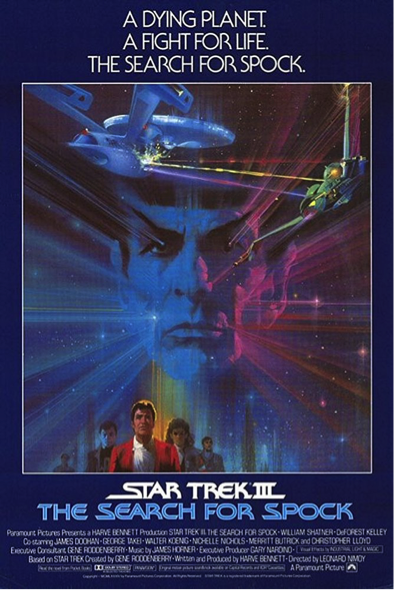
Star Trek III: The Search for Spock
I’m a big Star Trek fan. I love all of the original series movies. Most fans hold Star Trek II: The Wrath of Khan or Star Trek IV: The Voyage Home are their favorite movies. I love both of those installments, as well. But here’s why I put The Search for Spock on my list. It is really a story of resurrection and resilience. It is a story of doing what is right, even when others don’t agree with you. In defiance of Starfleet’s orders, Kirk and crew steal the Enterprise in order to save the katra or, for lack of a better word, spirit of their fallen comrade Mr. Spock. When they meet resistance in the form of the determined Klingon Commander Kruge (played by Christopher Lloyd), Kirk destroys the Enterprise to save the day.
Today, the poor U.S.S. Enterprise has been destroyed so many times that it’s comical. At the time of Star Trek III, though, this was the first time we had seen it happen. It was a huge deal. And I learned from it to do what’s right, even if it means going to extremes sometimes. If I had listened to everyone around me, I never would have gotten out of religious studies, never gotten out of psychology and come to the Savannah College of Art and Design (SCAD) in Atlanta to study photography and writing like I’d always wanted to do. Those decisions to leave what had become my life were terrifying at the time. But I cannot imagine my life today if I had not made leap and come to the SCAD Atlanta.
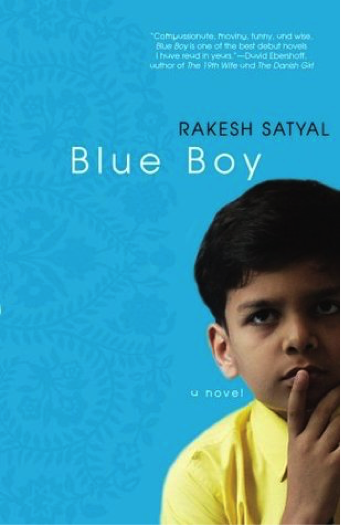
Blue Boy by Rakesh Satyal
In much literature today, there seems to be this idea that, in order for a story to be good, something tragic must happen. The protagonist must be disillusioned and despondent. Some writers tell such stories successfully, of course. But after a while I just get overwhelmed and feel like I don’t want to read any more, ever.
On the other hand, I don’t want fluff. I don’t want an unbelievably happy ending or a happily ever after. So I searched and searched, but there didn’t seem to be any happy medium.
Then I came across Rakesh Satyal’s Blue Boy. It is the story of twelve-year-old Indian American boy named Kiran. As Kiran deals with his burgeoning sexuality and his ethnicity, he becomes convinced that he is in fact the Hindu god Krishna.
Kiran faces adversity. He faces heartbreak. But there is no over-the-top tragedy. There is something magical, playful, and resilient in Kiran. And that resilience is what drives the book forward. It was the first time in a long time that I could not put a book down.
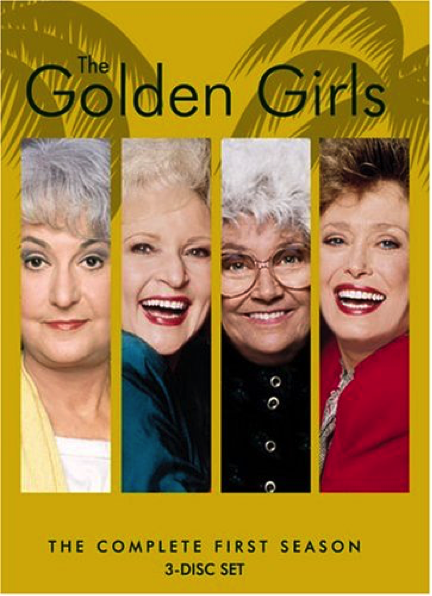
Okay. This isn’t a book or movie. It’s a television series. But it’s had such a positive impact on my life that I don’t think I can leave it off my list.
Although GG has a lot of the trappings of the tradition sitcom, on another level, the Girls’ lives are full of complexity. Blanche dates any number of men—“many, many men,” as she states in a couple of episodes—yet she also truly loves her late husband, George. Dorothy holds anger and hostility toward her ex-husband, Stan, yet still has feelings for him. In turn, he has feelings for her yet still can’t get her back, in spite of himself. Rose can be simple and naïve, but her wisdom comes through at the end. And Sophia is over eighty years old and still active in all kinds of ways. Then there are shows about gay characters and interracial and intergenerational relationships and HIV/AIDS and Alzheimer’s and on and on. The show is just a powerhouse.
Like Rakesh Satyal’s book, the characters in The Golden Girls face adversity and heartbreak, but they are resilient. And their resilience is believable. This makes GG something I carry with me wherever I go, whatever I’m doing. There’s a meme that says I only want to grow old if my life is going to be like The Golden Girls. That’s the show’s power. It makes growing older—something we all will do, and something we all tend to dread—something to look forward to.